
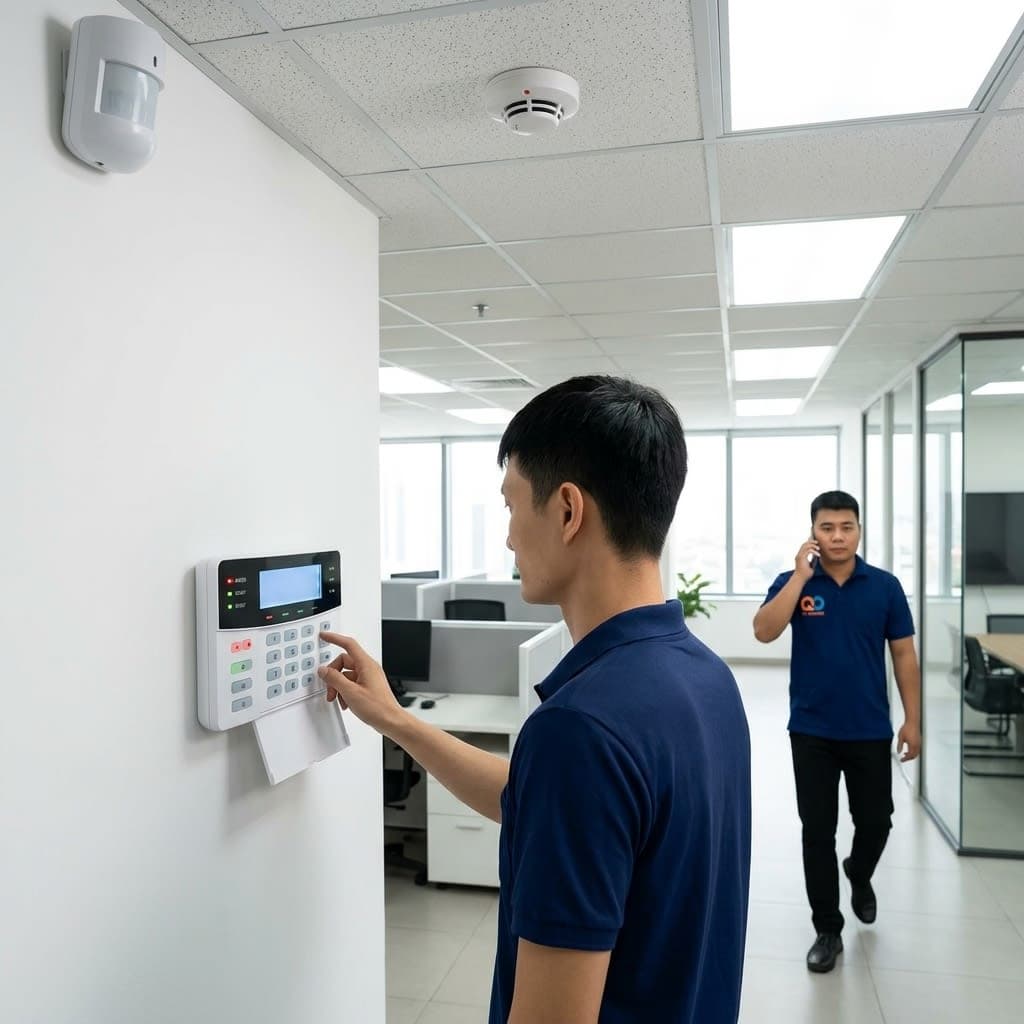
Alarm and Smoke Detection Systems for Businesses: Proactive 24/7 Defense
The Vietnam Fire Prevention and Rescue Department records an average of 6,000–7,000 fires annually , causing material damage of up to VND 2 trillion . Regarding commercial theft, the Ministry of Public Security estimates direct losses to small and medium-sized enterprises exceeding VND 4,500 billion in 2023. A common thread in most of these incidents is the lack of a proactive early warning system. A professional alarm and smoke detection system not only protects property—it protects businesses and human lives.
Core Components of an Enterprise Alarm System

A modern alarm system is not a single device but an integrated ecosystem comprising multiple specialized sensors, a control center, and notification devices. Each component plays a specific role in the detection-alert-response chain.
Intrusion Detection Sensor
PIR (Passive Infrared) sensors are the backbone of any anti-theft system. These devices detect changes in infrared thermal radiation when people or animals move within the coverage area (typically 90°–110° horizontally, range 10–15m). Newer generation versions combine dual-tech PIR + Microwave technology, reducing false alarm rates to below 2%.
Magnetic contact sensors are installed at every entry point—when a door is opened illegally, the magnetic circuit is interrupted and the central unit receives a signal immediately. Low cost and highly reliable, this is the first line of defense for any facility.
The Glass-Break Sensor analyzes the characteristic sound of breaking glass in the frequency spectrum of 100Hz–10kHz. The device can distinguish the sound of real glass breaking from similar noises (hammering, thunder) using an algorithm that analyzes the sound characteristics, with a detection range of up to 9m.
Vibration sensors, attached to walls, safes, and ATMs, detect physical impact even without breaking glass or opening doors.
NFPA Standard Smoke and Heat Detector
Smoke detectors are divided into two main types of technology:
- Photoelectric: Detects smoke from smoldering fires, organic matter, and plastics — the most common and safest method for offices.
- Ionization: Faster detection of flames but more sensitive to false alarms.
The NFPA 72 (National Fire Alarm and Signaling Code) standard — referenced by Vietnam in QCVN 06:2022 — requires smoke detectors to be inspected every six months and their batteries/devices replaced after 10 years.
Heat detectors are suitable for kitchens, workshops, and other environments where dust or steam frequently triggers false alarms from smoke detectors. Two types are available: fixed temperature (activated at 57°C or 68°C) and rate-of-rise detectors (activated when temperature increases by >9°C/minute).
Control Center and Programmable Keyboard
The control panel is the brain of the system—it receives signals from all sensors, processes the activation logic, and coordinates the output devices (siren, lights, relays). Minimum requirements for businesses:
- Backup battery provides 24–72 hours of power outage protection.
- Connection protocol: wired (4-wire bus) + wireless (RF 868MHz)
- Supports multiple independent zones — minimum 8 zones, recommended 16–64 zones
- The event history must store at least 1,000 records.
Notification Devices: Sirens, Lights, and Remote Warnings
- Outdoor siren: 100–110dB, weather resistant IP54 or higher.
- Strobe lights: Visually recognizable from a distance, important in high-noise environments.
- GSM/GPRS dialer: Automatically makes calls and sends SMS messages to 6–10 emergency phone numbers.
- App push notifications: Instant alerts on your iOS/Android phone with photos taken from the built-in camera.
Wired vs. Wireless Systems: The Right Choice
Criteria
Wired system
Wireless system
Installation costs
Higher (wiring installation)
Lower, quick installation
Signal reliability
Very high, no interference.
Okay, it might be subject to RF interference.
Scalability
Limitations according to the wiring diagram
Flexible, easy to add sensors.
Suitable for
New construction projects, large factories
The building is currently in operation, a showroom.
Aesthetics
Conduit needs to be installed.
Wireless, neat and tidy.
Sensor battery life
No batteries required.
Replace every 2–5 years
Stay connected during a power outage.
A separate UPS is needed.
Built-in self-sustaining battery
Hybrid solutions (combining wired for fixed areas + wireless for additional points) are becoming increasingly popular due to their good balance of reliability and flexibility.
Applications tailored to different types of businesses.

Luxury Homes and Villas
High-end residential systems need seamless integration with smart home technologies (Zigbee, Z-Wave, Matter) to control lights, air conditioning, and smart locks using a single app. Wireless sensors should be prioritized to preserve interior aesthetics. An emergency (panic button) should be added to the master bedroom and security area.
Warehouses and Storage Facilities
Large warehouses with ceiling heights of 5–12m present challenges regarding the placement of smoke detectors. According to TCVN 5738:2021, the maximum distance between smoke detectors is 9m (flat ceiling). It is recommended to combine linear heat detectors along the roof for more effective coverage of the wider area.
If the warehouse has guard dogs, choose a motion sensor with pet immunity to avoid false alarms at night.
Showrooms and Retail Stores
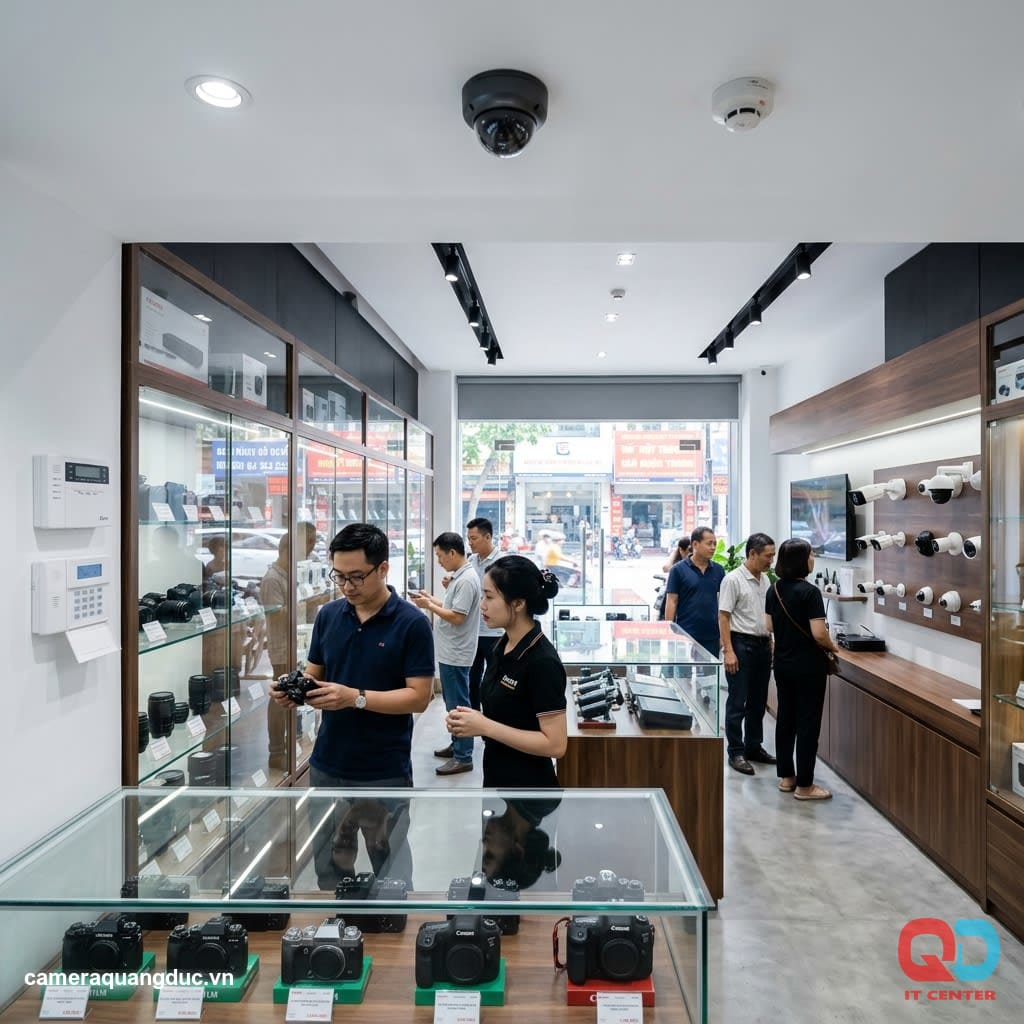
Showrooms require high aesthetic standards — choose white or cream-colored PIR sensors, recessed into the plaster ceiling. Integrate with a visitor counter sensor to accurately track the number of people in the premises when nighttime security mode is activated. Particularly important: install vibration sensors for display cases showcasing high-end products (jewelry, watches, electronics).
Comprehensive Security System Integration
The true value of an alarm system lies not in a single device but in its ability to integrate :
- With CCTV: When the sensor is activated, the camera automatically switches to high-resolution recording mode, takes a quick picture, and sends it to the central control center.
- With door control: Automatically lock all doors remotely upon detecting intrusion or fire.
- With a fire suppression system: A signal from the smoke detector activates the automatic fire pump and notifies the fire department.
- With the Access Control Center (ARC): Connect to a professional 24/7 monitoring center, and a rapid response team can reach the scene within 15 minutes.
Checklist for Evaluating Alarm Systems for Businesses
Use the following checklist after selecting a supplier:
- PIR sensors are deployed throughout entry points and critical areas.
- Smoke detectors comply with NFPA 72 / TCVN 5738:2021.
- The center has backup batteries that last at least 24 hours.
- Supports remote alerts via GSM and mobile application.
- Compatible with existing camera systems.
- The device has CE/FCC/UL certification.
- The supplier has a business license for fire protection services.
- Regular maintenance contract every 6 or 12 months.
- Inspected and approved by certified technicians.
Quang Duc's Alarm and Smoke Detection System Services
Quang Duc Electronics and Telecommunications Co., Ltd. provides comprehensive alarm and smoke detection solutions for businesses:
- Free survey and design consultation for systems according to NFPA and TCVN standards.
- Supply and installation of smoke detectors, intrusion sensors, and specialized control centers.
- Integrate alarm systems with CCTV, access control, and mobile applications.
- Multi-channel alert programming: GSM, SMS, Zalo, real-time push notifications.
- Regular maintenance and comprehensive system checks should be performed every 6 or 12 months.
Quang Duc has installed over 200 alarm and fire protection systems for warehouses, showrooms, and high-end private homes in Quang Nam and Da Nang — with a customer satisfaction rate of over 98%.
Conclude
Each year, thousands of Vietnamese businesses suffer losses from theft and fire not because of a lack of security measures — but because of a lack of timely warning systems. A professional alarm and smoke detection system is a truly valuable investment: the installation cost is only a fraction of the value of the assets being protected.
Don't let one careless night ruin years of hard work. A 24/7 active defense system works even while you sleep — instant alerts, quick response, minimal damage. Contact Quang Duc today for a free consultation and on-site survey.
Hotline: 0903 306 126 (Mr.Vũ Trần) | Website: cameraquangduc.vn


