Smart Zoned Audio Systems for Buildings and Shopping Centers
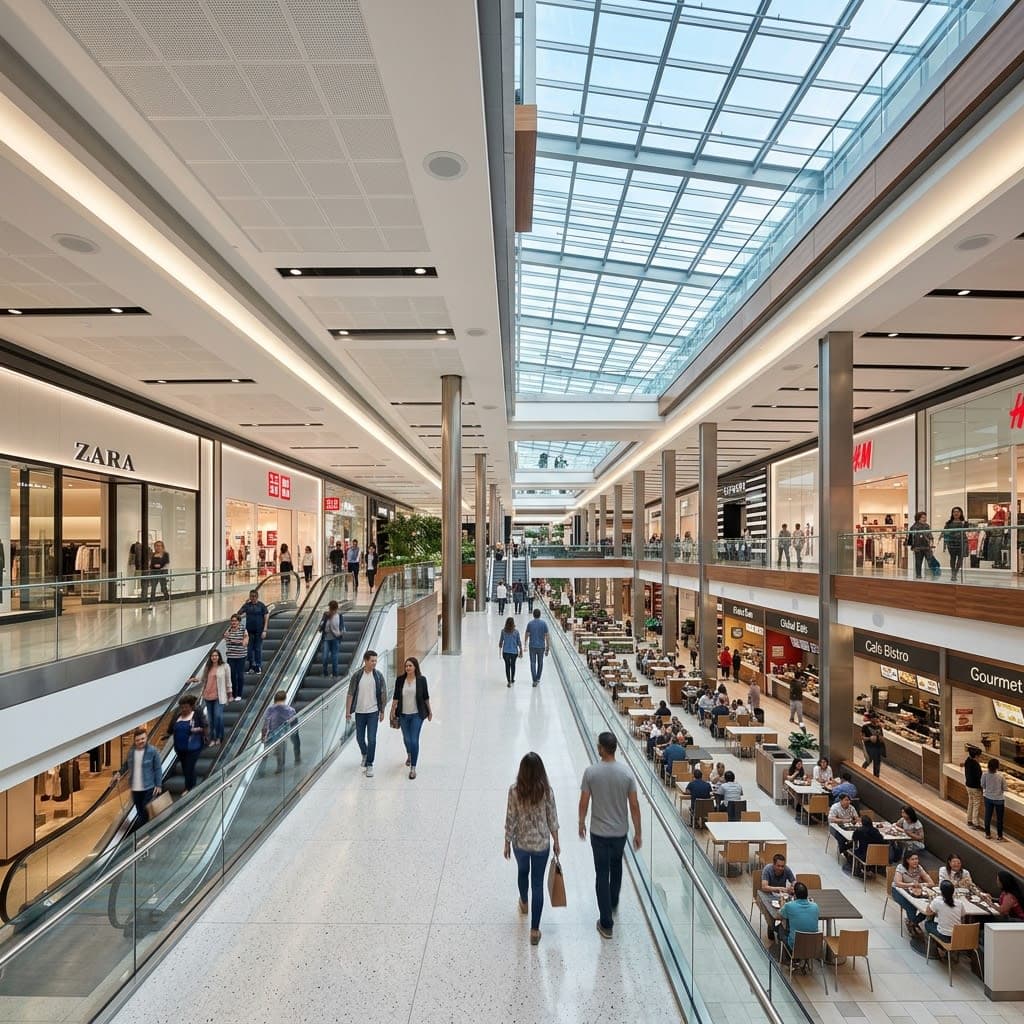
A medium-sized shopping mall in Vietnam typically has 15-30 different functional areas—retail, food court, corridors, parking lots, children's play areas—each with completely different audio needs in terms of content, volume, and timing. Using a traditional sound system that broadcasts from a single source throughout the entire building would severely impact the customer experience: music might be too loud in a quiet food court, or emergency announcements might not reach the necessary areas.
Zone audio is a technology that completely solves this problem — allowing a building to be divided into multiple independent control zones, each capable of playing content, at different volumes and schedules without interfering with each other.
How is Zoned Audio Different from Traditional Public Address (PA) Systems?
Many businesses confuse basic PA (Public Address) announcement systems with intelligent zone audio systems. The core difference lies in the ability to independently control content for each zone .
Criteria
PA traditional announcement
Zone Audio
Broadcast content
System-wide similarity
Different zones simultaneously
Control
Focused, manual work in the technical room.
Via app/software, remote control
Signal processing
Simple, minimal EQ intervention.
DSP processes each zone separately.
Main applications
Emergency announcement, general information
Background music, advertisements, and area-specific announcements.
Scalability
Limit
Flexible, easy to add new zones.
While PA systems are still essential for building-wide emergency announcements, zone audio adds a more refined audio experience to daily operations.
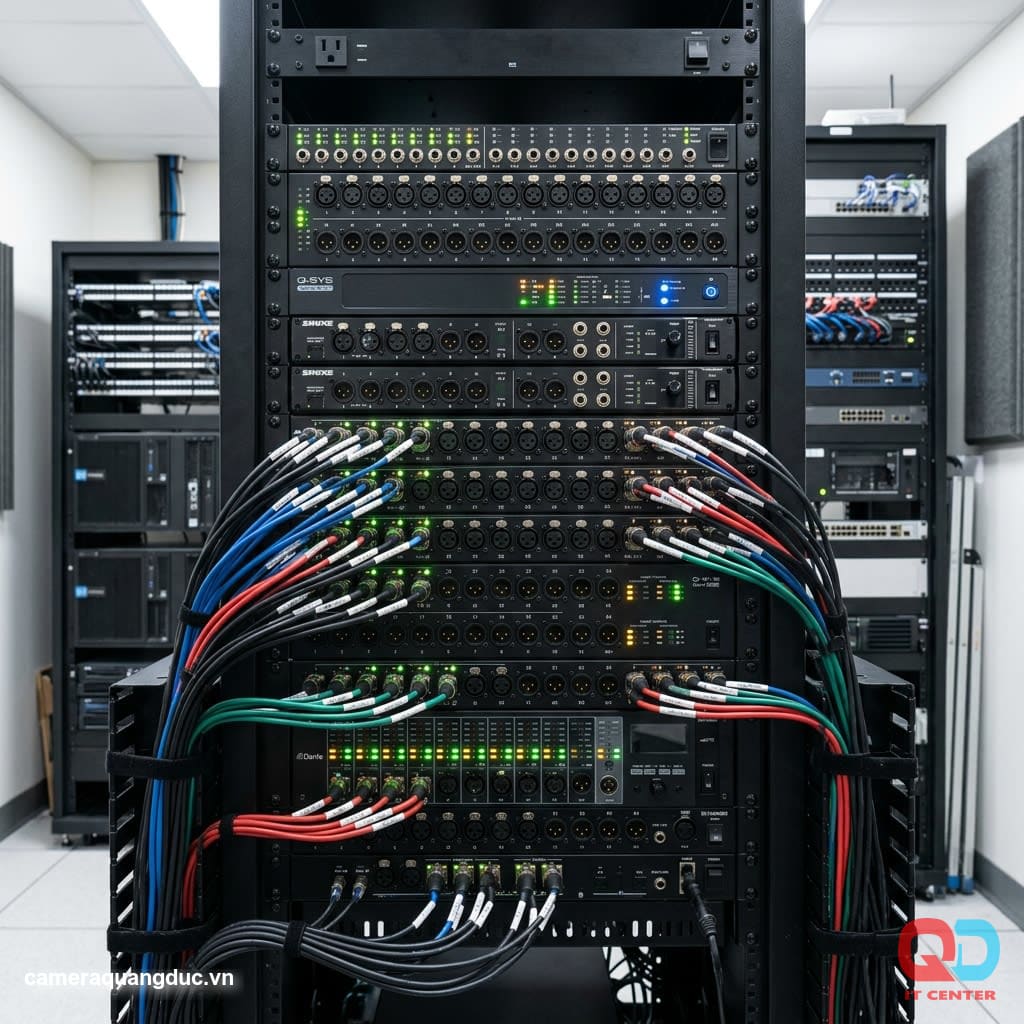
Core Component 1: Matrix Audio System
Matrix Audio is a central signal router that allows for flexible connection of multiple audio sources (background music, commercials, announcements, MC microphones) to various speaker zones.
- Number of input/output channels: Common systems support 8-32 channels, suitable for buildings ranging from small to large shopping malls.
- Flexible routing: Any source can be assigned to any zone, or multiple zones simultaneously.
- Automatic priority: When an emergency is detected, the system automatically mutes the background music in all relevant zones to play the highest-priority announcement.
Core Component 2: Digital Signal Processor (DSP)
DSP (Digital Signal Processing) is the "brain" that processes the sound quality for each individual zone:
- Independent EQ adjustments: Noisy food courts may need a slight boost in mid-bass to drown out background noise, while office areas require a softer, more balanced sound.
- Automatic volume control: Some modern DSPs incorporate ambient noise sensors, automatically increasing/decreasing background music volume based on actual crowd levels.
- Anti-feedback and noise filtering: Ensures stable signal quality over long cable distances in large buildings.
Core Component 3: App-Based Control and Management Software
The biggest difference between modern zone audio and traditional systems is the ability to control them remotely via a mobile app or centralized management software .
- Administrators can turn on/off, adjust volume, and change playlists for each zone directly from their phones without needing to go to the technical room.
- Schedule automatic playback according to time slots (upbeat music during peak hours, soft music during closing time).
- Zone-based management authority — food court managers can only control their own zone and cannot affect other areas.
- Monitor equipment status in real time, and receive alerts when speakers or amplifiers malfunction.
Based on actual implementation, controlling via app saves 40-50% of operating time compared to manual methods in the central technical room.

Practical Applications of Zoned Sound Systems in Buildings
Shopping mall
- Retail area: background music that matches the brand of each store or the general area.
- Food court: more lively music, higher volume to suit the dining atmosphere.
- Children's play area: cheerful children's music, volume controlled to ensure safety for children.
- Parking lot, hallway: directional signs, security information.
Office Building
- Reception area: formal, professional background music.
- Shared workspace: low volume, no distractions.
- Meeting rooms, auditoriums: independently controlled for private events.
Apartment Buildings, Urban Areas
- Amenities area (swimming pool, gym, playground): music suitable for each space.
- Announce to residents in each block/building separately without disturbing the entire complex.

Integrating Zone Audio with Smart Building Systems (BMS)
The current trend is to integrate zoned audio systems into smart building management systems (BMS) for synchronized operation:
- Integration with the fire alarm system: Upon receiving a fire alarm signal, the zone audio automatically switches to playing evacuation announcements in the specific area where the incident occurred and surrounding areas.
- Synchronization with lighting systems: Some modern buildings link zone audio with light sensors to automatically adjust background music according to daylight/dark hours.
- Connecting to access control systems: Zone audio can automatically activate when it detects a sudden surge in people entering or exiting a specific area.
- Centralized monitoring via a single platform: The building operations team manages electricity, water, security, and audio simultaneously through a single software interface.
Benefits of Integrating BMS
Integration helps reduce the number of disparate management systems, increases the ability to respond quickly in emergency situations, and optimizes the operating costs of technical personnel for large-scale buildings.
Estimated Investment Costs Based on Building Size
The cost of deploying a zoned sound system depends on the number of zones, the number of matrix audio channels, and the level of integration with the control software.
- Small office buildings (5-8 zones): Estimated cost ranges from 80-150 million VND for a basic matrix audio system and simple DSP.
- Medium-sized shopping mall (10-20 zones): Estimated cost 200-400 million VND, including app-based control software and integrated emergency notification priority.
- Large shopping malls with integrated BMS (over 20 zones): Estimated cost starts from 500 million VND and up, depending on the level of integration with fire alarm, security, and building management systems.
This is a reference figure; the exact cost will need to be calculated after a site survey of the infrastructure and the specific operational requirements of each building.
Checklist for Implementing a Zoned Sound System in a Building
- Survey and divide the number of zones according to the actual function of each area.
- Determine the required number of audio matrix channels based on the number of zones and the source.
- The DSP option offers the ability to process EQ independently for each zone.
- Designing an automated priority system for emergency notifications.
- Choose the control software/app that best suits the scale and management access requirements.
- Check the possibility of expanding the zone when the building is developed to include new areas.
- Train the operating team to use the control app proficiently.
- Plan for regular maintenance of speaker systems, amplifiers, and signal cables.
Common Mistakes When Implementing Zone Audio
Mistake
Consequence
How to fix it
The number of zones is too small compared to the actual function.
The volume cannot be controlled separately.
Conduct a thorough survey of the function of each area before designing.
Selecting an audio matrix that lacks a backup channel.
It cannot be expanded when the building is developed with additional areas.
Choose a system with 20-30% redundancy.
Skip emergency priority integration
Safety notifications did not reach the necessary areas in a timely manner.
The design logic prioritizes automation from the outset.
No training for the operating team.
Not fully utilizing the app control features.
Provide thorough training and user manuals.
Lack of a regular maintenance plan.
The equipment degrades silently, and the problem is detected late.
Schedule regular quarterly and annual inspections.
Quang Duc's Custom Zoned Audio Service
Quang Duc Electronics and Telecommunications Co., Ltd. provides smart zoned audio solutions for buildings and shopping malls, including:
- Survey and design consultation for zone layout suitable for the building's structure and function.
- Implementing a matrix audio system and professional DSP signal processing.
- Integrate remote control software/apps and zone-based access control.
- Ensure compatibility with existing emergency announcement PA systems.
- Regular maintenance and technical support ensure the system operates stably in the long term.
With experience in implementing sound solutions for numerous buildings and shopping malls in the local area, Quang Duc provides solutions tailored to each customer's specific operational needs.
Conclude
Intelligent zoned audio is not just a technological upgrade, but also a tool to optimize the experience and operation of large-scale buildings and shopping malls. With the ability to independently control each area via matrix audio, DSP, and a management app, businesses can create a suitable audio experience for each space while ensuring centralized and efficient operation.
If you need advice on implementing a zoned sound system for your building, contact Quang Duc today for a site survey and consultation on the most suitable solution.
Hotline: 0903 306 126 (Mr.Vũ Trần) | Website: cameraquangduc.vn