Comprehensive Guide to Installing a Burglar Alarm System for Townhouses
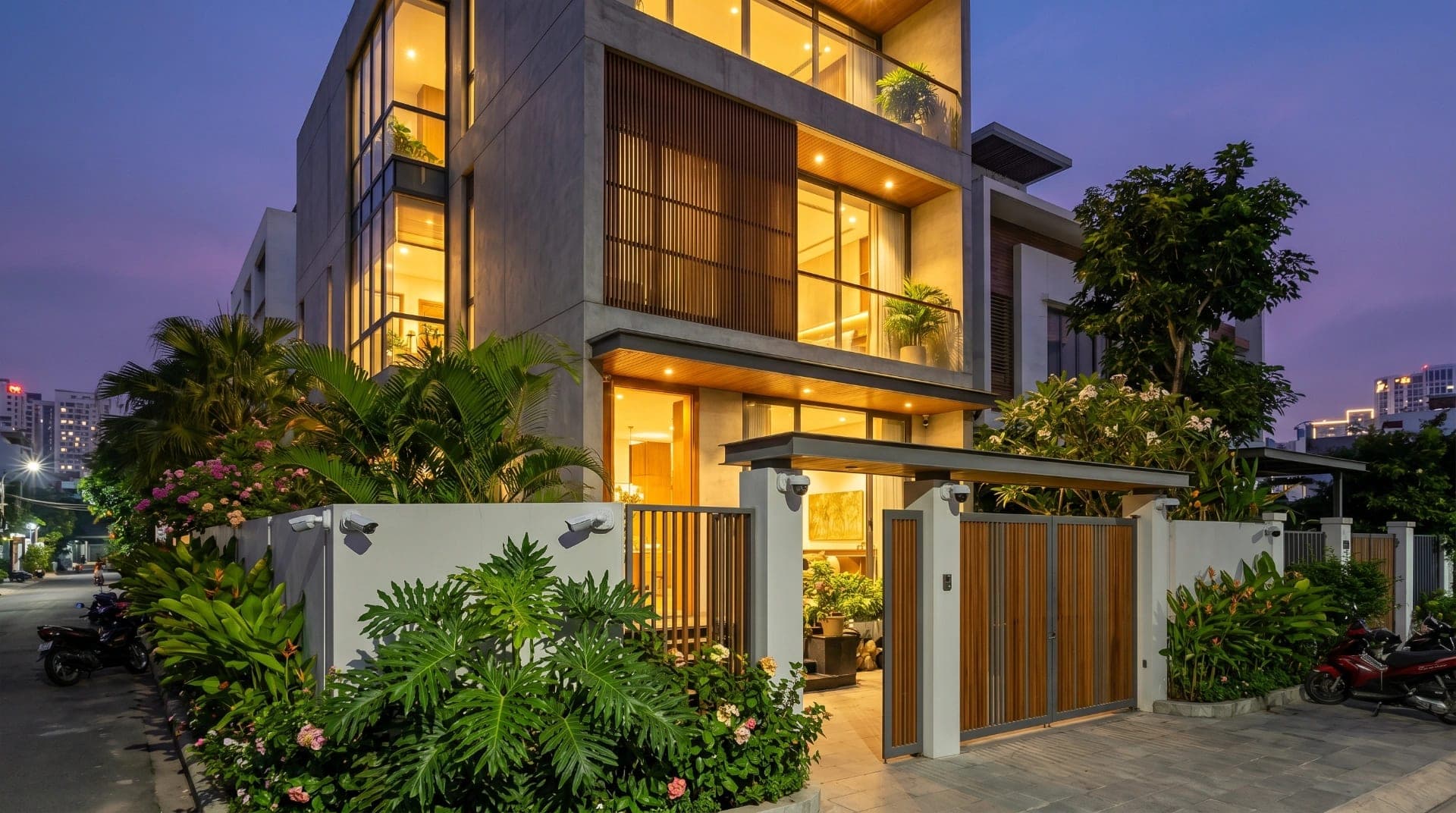
Vietnamese townhouses have a distinctive architecture: narrow, multi-story, with staircases inside the house, and often with a small alley at the back. This presents both an interesting design challenge and a security one — burglars can gain entry through various points that homeowners might not expect.
A properly designed burglar alarm system will cover all those vulnerable points: front doors, windows on all floors, the roof, the back alley — and send instant alerts to your phone wherever you are. This article provides a practical, step-by-step guide for Vietnamese townhouse owners.
Why Do Townhouses Need Their Own Alarm System?
Many families think that surveillance cameras are sufficient. In reality, cameras and alarms serve two different purposes:
- Cameras: Record evidence, review footage, monitor remotely — but they don't prevent burglars from entering a house.
- Alarm system: Proactively alerts upon intrusion, creates a loud noise to scare away intruders, and immediately notifies the homeowner and neighbors.
The best solution is to combine both — cameras that record, alarms that alert, and prevention.
Alarm System Architecture
A complete system consists of four main components:
Cảm biến (Sensors) ↓ Tủ Trung Tâm (Control Panel) ↓ Còi Hú / Đèn Cảnh Báo ↓ Thông Báo: App / SMS / Cuộc Gọi 1. Types of Sensors and Installation Locations Cảm biến (Sensors) ↓ Tủ Trung Tâm (Control Panel) ↓ Còi Hú / Đèn Cảnh Báo ↓ Thông Báo: App / SMS / Cuộc Gọi
Magnetic Door/Window Sensor
This is the most basic sensor — it consists of two magnetic parts attached to the door and the door frame. When the door opens, the magnetic circuit is broken, and the alarm is triggered.
Characteristic:
- Compact, easy to install, battery lasts 2–3 years.
- Accurately detects when a door is opened (100% accuracy).
- Unaffected by wind, light, or temperature.
Installation location for townhouses:
- Ground floor entrance (required)
- Back door/kitchen door (often overlooked)
- The windows on the upper floors are climbable (the first and second floors are adjacent to the roof of the neighboring building).
- Rooftop (terrace) doors — a common and often overlooked entry point.
Estimated number of magnetic sensors for a 4-story townhouse: 6–10
Passive Infrared Motion Sensor (PIR)
Motion detection via infrared temperature changes within the viewing area (90°–110° angle, range 8–12m). Suitable for indoor installation to detect when a person has entered the premises.
Characteristic:
- Cover a large area with a single sensor.
- There may be blind spots if installed incorrectly.
- The sensitivity needs to be adjusted to avoid false alarms caused by pets (cats, small dogs).
- Some "pet immune" formulas ignore movement in pets under 25kg.
Installation location:
- Ground floor living room (facing the staircase and main entrance)
- Corridor on each floor (installed in the corner of the wall, 2–2.2m high)
- Garage, storage room (if any)
Estimated number: 4–6 PIRs for a 4-story townhouse
Glass Break Detector
Detects the characteristic sound of glass shattering (frequency 3–6kHz) at a range of 6–9m. Important for homes with many glass doors and glass facades.
Note: Detection is only performed when the glass is shattered — it will not detect if the window frame is cut or the entire pane of glass is removed. Combine with a magnetic sensor for full coverage.
Installation location: Living room with large glass doors, or shop front if it's a house combining living and business.
Vibration/Shock Sensor
Detects unusual vibrations on walls, doors, and window frames. Useful for:
- Metal roller doors (for garages, shop fronts)
- Shared wall with former neighbor or quiet alley.
- Safes, cabinets for storing valuables
Sensitivity needs to be adjusted carefully — too sensitive will give false alarms when trucks pass, too low will ignore the real signal.
Smoke and CO Sensor (Smoke/Carbon Monoxide Detector)
Not intended for burglar alarms, but often integrated into a general alarm system for centralized alerts. Required if the house has a gas stove or generator.

2. Control Panel
The brain of the entire system. The central control panel receives signals from all sensors, processes the logic, and triggers the alarm.
Important Features to Check
Number of zones: Each sensor/group of sensors occupies one zone. A 4-story townhouse typically requires an 8–16 zone control panel.
Backup battery: When the main power goes out, the refrigerator must continue to operate. A good backup battery should last at least 8–12 hours.
Network connectivity: Modern cabinets support:
- Ethernet/WiFi: Send notifications via the internet to the mobile app.
- GSM/4G: Send SMS and make voice calls when the internet is down (important — this is an essential backup).
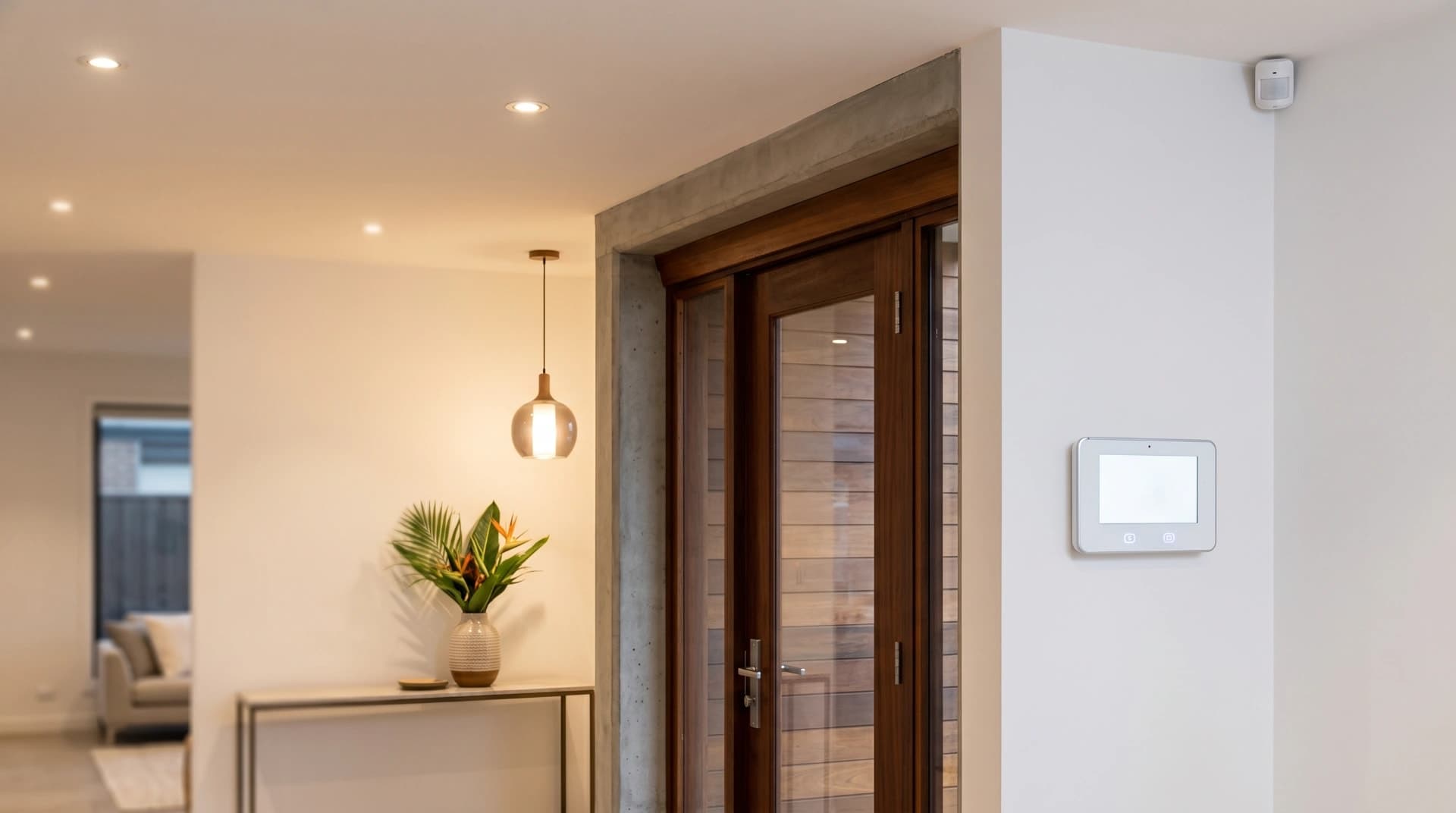
Programmable keypad: Installed at the entrance to activate/deactivate the system using a PIN code. Some modern cabinets also support fingerprint or RFID card access.
Entry/exit delay: Allows homeowners 30–60 seconds to turn off the system after entering or leaving the house before the system fully activates.
Popular Brands in Vietnam
- DSC (Canada): Professional line, popular for residential and small/medium businesses.
- Paradox (Canada): Known for its stability and scalability.
- Hikvision AX PRO: A next-generation wireless system that integrates seamlessly with Hikvision cameras.
- Texecom (UK): High-end, suitable for villas and large businesses.

3. Siren and Strobe Warning Lights
Outdoor Siren
Mounted on the facade of the house, 3–4m high. When activated, it emits a sound of 100–120dB — loud enough to be heard from 50–100m away. Function:
- Wake up the neighbors, draw the community's attention.
- A panic-inducing tactic to chase away thieves before they can take anything.
Requirement: Outdoor horns must have tamper protection – it will activate if someone attempts to remove it.
Indoor Siren
Installed indoors, with a lower volume (85–100dB), usually attached to a central control panel or in a hallway. Sufficient to alert people inside the house.
Strobe Warning Light
High-speed flashing lights help pinpoint the location of the house with the alert — crucial for security personnel or neighbors to quickly locate it.

4. Smart Notifications — App and SMS
Modern alarm systems don't just sound an alarm — they send real-time notifications to your phone.
Mobile App
Most manufacturers provide their own apps (iSmart Alarm, DSC Connect, Hikvision Hik-Connect...). Through the app you can:
- Receive push notifications as soon as the sensor is activated.
- View live camera feed simultaneously with alerts.
- Turn the system on/off remotely.
- View event history (who turned it on/off, when the sensor was triggered).
- Manage multiple users (spouse, parents with different permissions).
SMS and Voice Calls
The GSM/4G module in the central control panel sends SMS messages to up to 4–6 pre-programmed phone numbers. More importantly, it can automatically make calls in order of priority — if number 1 doesn't answer, it switches to number 2, then number 3.
This is an important layer of protection when the internet is interrupted (professional thieves can cut cables or disable Wi-Fi beforehand).
5. Integration with Surveillance Cameras
When the alarm sensor is triggered, the system can:
- Enable high-speed recording on the relevant camera (pre-alarm recording — saves images even before an alarm is triggered).
- Send snapshots from the camera to your phone along with a notification.
- Turn on automatic lighting to help the camera record clearer images at night.
- Display a live pop-up on the NVR screen if someone is present.
This integration creates a synchronized response: an alarm sounds, the camera confirms, and the homeowner decides on action .
6. Layout Guide for Vietnamese Townhouses
Typical Layout Diagram — 4-Story Townhouse
Location
Sensor suggested
Ground floor entrance
Magnetic sensor + PIR sensor facing inwards
Back door/kitchen
Magnetic sensor
Garage/rolling doors
Magnetic sensor + vibration sensor
First-floor window (easy to climb)
Magnetic sensor
Second-floor window (adjacent to the roof of the neighboring building)
Magnetic sensor
Main staircase
PIR (Person Detection)
Second floor hallway
PIR
Third floor hallway
PIR
Terrace door
Magnetic sensor
Living room (if it has large windows)
Glass break detector
Total: ~10–12 sensors, 16-channel control panel, 1 external siren + 1 internal siren
Specific Notes on Vietnamese Townhouses
- Back alley: If your house has a back alley leading to a smaller alley, this is often a vulnerable entry point. Install magnetic sensors on the back door and short-range PIR sensors facing the alley.
- Adjacent roofs: Townhouses built very close together — burglars could climb from the adjacent roof. High-floor windows and roof access doors need magnetic sensors.
- Mixed-use building: Ground floor opens onto the street — requires a separate zone with a different delay compared to the family living area on the upper floor.
- Pets: If dogs or cats roam around the house at night, choose a "pet immune" PIR sensor or install it higher than 1.8m to avoid false alarms.
7. Reference Costs
Scale
Configuration
Estimated cost
Basic
8-channel control panel + 6 magnetic sensors + 2 PIR sensors + 1 siren
4–7 million
Medium
16-channel control panel + 10 sensors + 4 PIR sensors + GSM + app
8–15 million
Full
Professional cabinet + 15+ sensors + integrated camera + UPS
20–35 million
The price includes equipment and installation labor. It does not include the cost of additional cameras if they are added.
Factors Affecting Costs
- Number of penetration points to cover
- Equipment brands (general vs. professional)
- GSM/4G connectivity (requires a SIM card with a monthly subscription fee of approximately 50-100k VND)
- Integrate with existing cameras or install completely new ones.
- In-wall or surface wiring (in-wall wiring incurs additional finishing costs).
8. Regular Maintenance of Alarm Systems
Alarm systems require maintenance at least every 6 months.
- Check the wireless sensor's battery (replace it before it runs out to avoid the sensor losing power without you realizing it).
- Test all sensors — activate each one and confirm the control panel receives the signal.
- Check the central control panel's backup battery — enable the outage test mode and see how long the panel can maintain power.
- Update the firmware if the cabinet supports it.
- Verify that the SMS phone number is active and the recipient is correct.
Professional Alarm System Installation with Quang Duc
A misplaced or incorrectly configured burglar alarm system will either give continuous false alarms (so annoying that the homeowner turns it off themselves) or miss the actual point of entry. Both are failures in achieving security goals.
Quang Duc Electronics and Telecommunications Co., Ltd. specializes in designing and installing burglar alarm systems for townhouses, apartments, and businesses. Quang Duc 's technical team will:
- Conduct a field survey and analyze the security vulnerabilities of the house.
- Optimized sensor design, ensuring no intrusion points are missed.
- Neat installation, consultation on configurations suitable for the family's lifestyle.
- Provide instructions on how to use the app and test the entire system before handover.
- Warranty and post-installation technical support
Contact cameraquangduc.vn today for free consultation and on-site survey — the first step to truly and effectively protecting your family and property.